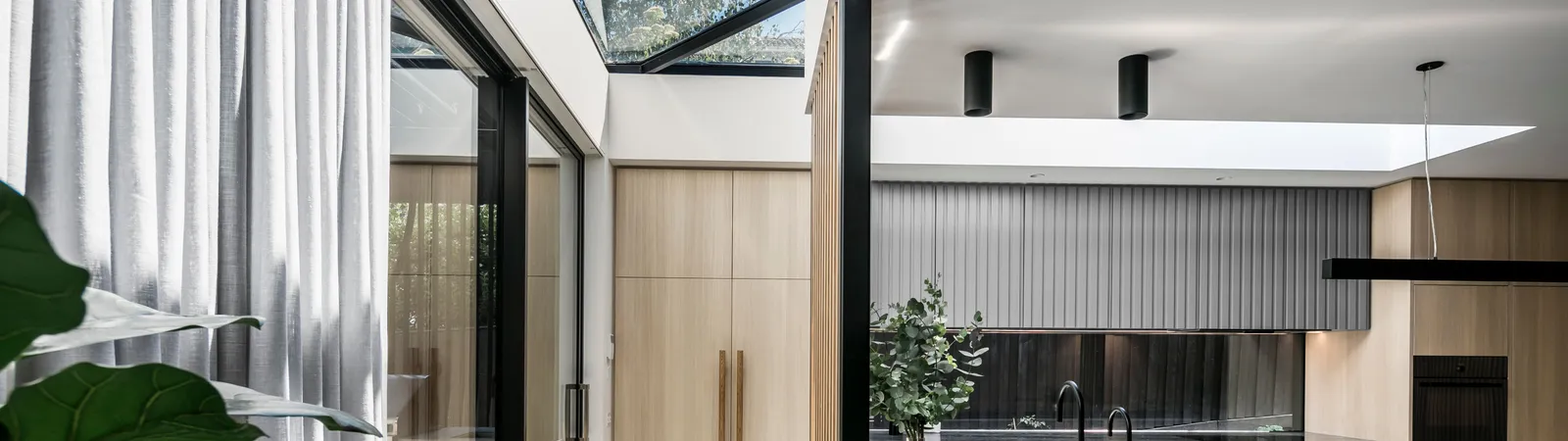
Home automation in a new build, what to settle early
The part of home automation that decides whether it works is settled before the walls close, not after you move in. The visible devices, the switches, the screens and the speakers, are the easy part. The infrastructure that carries them, the cabling, the conduit, the network and the coordination between trades, has to be resolved while the walls are still open. Once the plaster is on, every change is expensive.
This article covers what to plan for, why retrofitting costs what it does, and where the decisions sit in the build.
The infrastructure is the project
A reliable automated home runs on structured cabling. Four decisions land during pre-construction.
Data cable to every point that might one day carry a screen, an access point, a camera or a control panel. Conduit to locations where a cable might be needed later but is not certain now.
A network backbone sized for the house rather than for a single room. A place for the equipment to live, with power, ventilation and access.
None of this is visible in the finished home. All of it has to be decided before the linings go up.
Wireless has its place, but a home that depends entirely on wireless control tends to disappoint. Walls, floors and distance degrade a wireless signal in ways that are hard to predict from a plan. Cable where it matters and wireless where it does not is the durable approach.
Coordination is where it succeeds or fails
Home automation sits across several trades. Three roles have to agree before the work starts.
The electrician runs the power and often the cabling. The audiovisual integrator specifies the control system, the network and the devices. The architect sets the locations, the finishes and what is concealed.
Each depends on the others. A switch location, a speaker cutout, a concealed conduit, a cupboard for the rack: all of it has to be coordinated in documentation rather than discovered on site.
When the integrator is brought in late, the common result is compromise. Cables run where they can rather than where they should. Devices sit where the structure allows rather than where the design intended. The remedy is to involve the integrator during pre-construction, alongside the electrician and the architect, so the infrastructure is set into the documentation before construction begins.
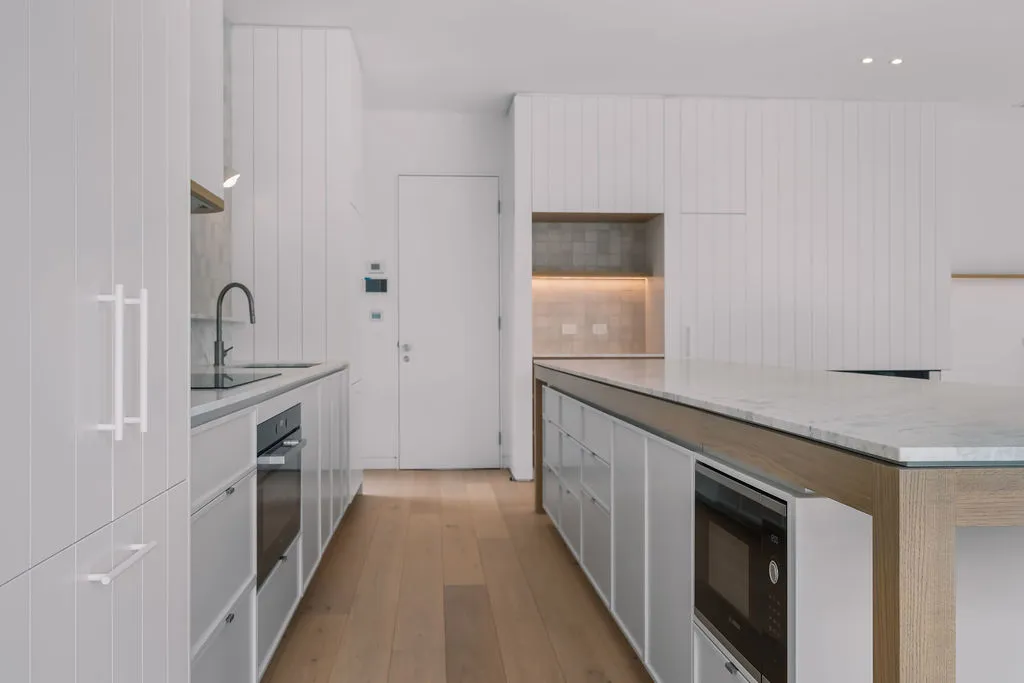
Provision for what you are not sure about
Most homeowners are certain about some of the automation and undecided about the rest. The practical answer is to provision.
Run the conduit and the cabling to the locations you might use, even where the device is not part of the first stage.
The marginal cost of a cable run during construction is small. The cost of opening a finished wall to add one later is not.
Where this sits in the build
Home automation is a pre-construction decision. The infrastructure is documented before the contract, coordinated across the trades, and built into the early stages of construction before the linings are closed. This is the same discipline TCON applies to building performance and to every service that has to be right before the walls close. It is settled in the Pre-Construction Program, not negotiated on site.
If automation matters to you, raise it early, so the infrastructure can be documented before construction rather than retrofitted after handover.
Building with TCON
Considered architecture demands considered building. Building with TCON is a complete account of how TCON works. Available on request and reviewed personally by Tim before release.
Request a copy of Building with TCON.